

When Archie the Cuddly Cavapoo Growls
Why don’t some dogs like being touched?

True stories from the life of professional dog behaviourist Theo Stewart. She lives in a pretty town in South West England and has helped thousand of dogs and their owners to live happier lives together over the last 20 years.
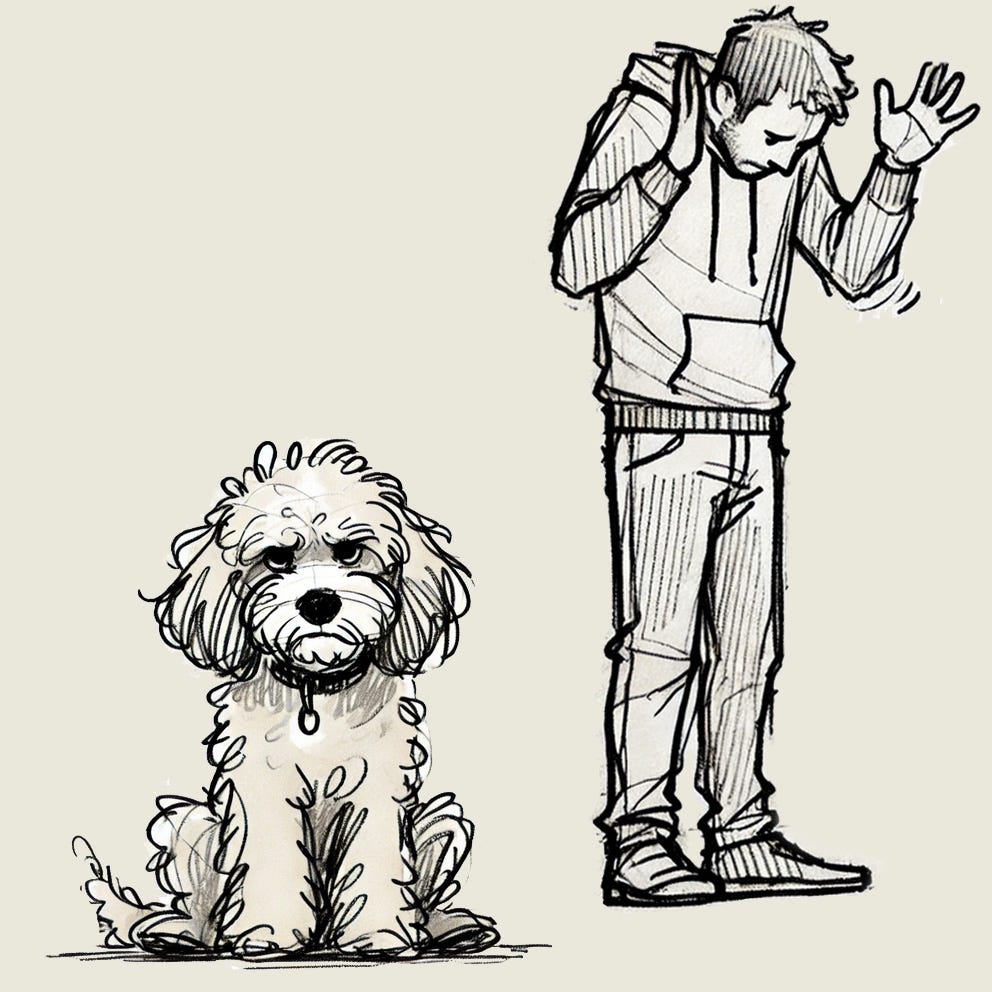
The cuddly dog who says ‘no thanks’ to cuddles
For every owner who’s been surprised by their dog’s growl.
He looks like a teddy bear. But there’s a catch...
What happens when the fluffiest dog in the park wants space instead of snuggles?
Meet Archie the Cavapoo.
He looks like a fluffy teddy bear.
But try to give him a cuddle, and you might be met with a low growl.
Archie’s humans are puzzled.
They love him to bits.
But they don’t understand why he’s so grumpy when they try to show affection.
Is it something they did?
Or is Archie just not a touchy-feely kind of dog?
So irresistible, so… untouchable.
Archie’s the kind of dog that makes strangers stop in their tracks.
People can’t help but reach out, ruffling his soft curls.
But Archie doesn’t like it.
At home, it’s the same story.
In the mornings, his owner approaches him on the sofa, ready for snuggles—and Archie growls.
“He’s just grumpy in the mornings,” they say.
But is he?
It wasn’t always like this.
They noticed he became more nervous after being castrated.
That’s not uncommon.
And maybe, just maybe, Archie’s been trying to tell them for a while.
But they didn’t notice the subtle signs—the turning away, the yawns, the lip licks.
Now, he skips the warnings and goes straight to growling.
The awkward encounters.
Outside, it’s even trickier.
People see Archie’s cute face and can’t resist.
They lean in, hands outstretched.
Archie objects.
His humans feel embarrassed.
They wish he’d just let people fuss over him.
But Archie has other ideas.
Sometimes, he even growls when he jumps up next to his humans at home.
It confuses them.
Isn’t he asking for attention?
Maybe not.
Maybe he just wants to be near them—not touched.
So, what can they do?
Here’s the surprising part.
The solution isn’t about ‘fixing’ Archie’s growling.
Instead, they need to give him space.
Let him rest without interruption.
And when he’s ready?
He’ll come to them.
Out and about, they can be Archie’s advocates.
Letting people know he’s not a fan of being touched.
Just because he looks like a plush toy doesn’t mean he wants to be treated like one.
Could it be pain?
Of course, they had to rule that out.
The vet checked him thoroughly and even tried painkillers.
But nothing changed.
Sometimes, it’s not about physical pain—it’s about past experiences.
Maybe something hurt once, and Archie remembers.
At the end of the day, Archie knows what he likes.
And what he doesn’t.
The good news?
When Archie chooses to approach people, he’s happy.
He greets the neighbour at the fence with tail wags and enjoys a little fuss.
The difference?
It’s on his terms.
His humans are learning.
They’re giving him choices, and slowly but surely, Archie is starting to relax.
The growls are fewer, and the cuddles—when they happen—are all the more special.
Does your dog need Theo’s help?
Click here if you would like to get expert help that is tailored to you and your dog.
“Meeting with Theo was fantastic. She is so knowledgable, and totally solution focused. We’ve been equipped with brilliant tools and exercises to help us overcome our challenges, and we feel confident about our next steps.”
Next time
Now that Archie and his human family are feeling less concerned, it’s time to meet a new friend who’s stirring up a different kind of anxiety.
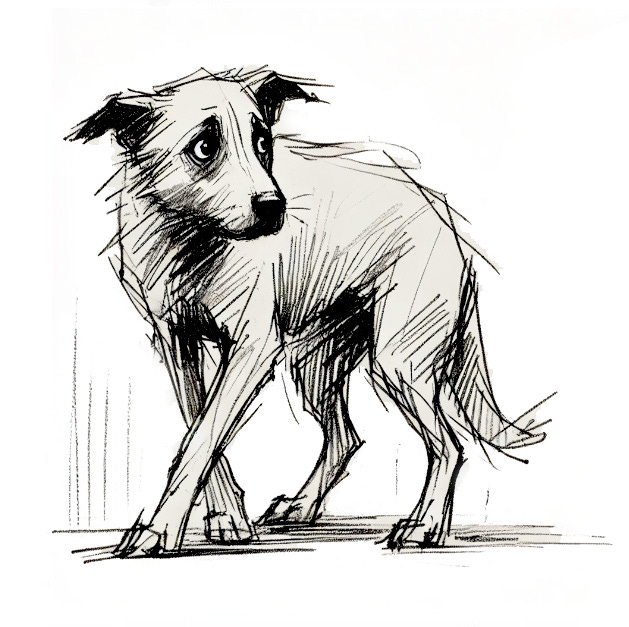
Next time: You’ll meet Neo, the street-smart pup who can’t shake the feeling that danger is always around the corner.
You won’t want to miss how his humans help him find calm in a world that feels anything but safe.
About the author
Theo Stewart is a dog behaviourist who lives in a pretty town in South West England. She has been a regular dog behaviour expert on local BBC Radio.
This is a true story. For privacy, names and details have been changed.
Remember, every dog is unique. Always consult a professional for advice tailored to your dog’s needs. Click here to get help that will be tailored to you and your dog.

Author: Theo Stewart
Editor: Sarah Hyndman (Theo’s daughter)
 | A guest post by
|